1000
EP 1000
4 Stacey June 1000 Minute Live Stream
This week we’re celebrating the best bits from our 1000 minute live stream. Email us: hi@thedailytalkshow.com Send us mail: PO BOX 400, Abbotsford VIC 3067...
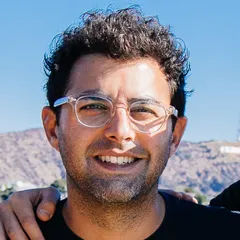
Ryan Shelton has worked on some of Australia’s largest TV productions, as a comedian, writer and producer.
Ryan is incredibly hard working and talented, writing and producing Hamish and Andy's Gap Year, True Stories, co-writing Chris Lilley's award-winning We Can Be Heroes, and was a regular on Rove.
Ryan on Instagram: https://www.instagram.com/ryansheltonography/
Verbatim from the transcripts — each quote links to the moment.
“I'm just going to— you just decide to do it.”
“Maybe if I just never release it, then that's the purest form. Like, that's the purest form of process is never releasing the product.”
“It's not to build an audience necessarily... I don't want to catch myself saying, please subscribe.”
“The good life has been taken over by fame and money... but I just, I'm just so confident that that's not the case.”
“And I think you've just got to be truthful to yourself and listen to yourself and try and block out what other people are telling you is is the good life.”
“If people fucking hate it and like watch it and go like, you indulgent piece of shit, who the fuck do you think you are making us spend 35 minutes watching your fucking love project? Then I'll also believe that and just think like, people hate me.”
“Well, it's 6 o'clock, skivvy and scotch. Isn't everyone doing that, mate? You're on the wrong call.”
“I feel like what— like the off-air is on-air. But the off-air is the on-air. That is what it is. It's great.”
How can I stay motivated to finish creative projects?
Set a recurring public deadline (like releasing something on the same date every month) to create accountability and self-discipline, since without it you'll likely find excuses not to make things.
Should I set a long-term end goal for my creative project?
Avoid fixating on an end goal or finish line (like reaching a follower count); treating a project as ever-evolving rather than building toward a conclusion removes pressure and keeps the motivation pure.
How do I balance having a day job with pursuing creative passion projects?
Keep both — a job removes financial stress and anxiety (which otherwise undermines creativity), while carving out dedicated time, even late nights, for the passion project ensures it still gets made.
Is it worth seeing a psychologist even if I'm not 'unwell'?
Seeing a psychologist or therapist can help you figure out who you actually are versus who you think you should be, and is valuable for anyone, not just those in crisis.
How should I handle feedback on creative work?
Try not to personalize or 'absorb' feedback — enjoy positive comments without over-identifying with them, and let negative comments go without concluding people dislike you as a person, since attaching your identity to the work makes both good and bad feedback destructive.
How do you deal with hating your own work right before releasing it?
Ryan Shelton explains that getting too close to a project makes you lose sight of the original excitement that made you want to create it, and instead fixate on tiny details others won't notice — recognising this as a normal part of the process rather than a sign the work is actually bad.
Ryan Shelton recalls that during the week-long shoot for Loophole, the crew filmed until 5am one night because they were drinking and having fun with no one forcing them to wrap, making it one of the best weeks of his life.
Ryan Shelton describes being interviewed by Wippa on Fitzy & Wippa, who claimed to have watched Ryan's 'Sorry' video in full but it became clear he hadn't, which Ryan found classic and amusing.
Ryan Shelton describes visiting a friend who is a painter, observing paint footprints between multiple canvases he works on simultaneously without needing permission, which inspired Ryan's approach to his own creative output as an ongoing body of work.
Ryan recounts how he, Hamish, Andy and Tim Bartley formed Radio Karate and made a short mockumentary, Greystone 2800, for a failed Channel 7 pilot; they entered it into the Melbourne Comedy Festival short film competition, it won, got screened on Foxtel, and that led to a meeting with Rove's team and the creation of his Real Stories segment.
Ryan recalls that during Year 12 Schoolies Week in Noosa, he and Hamish left a nightclub mid-night because they realised Rove's show (Rove's first year, on Channel 9) was about to start, and ran home to watch it — a few years before they ended up meeting Rove professionally.
Ryan describes making his first Rove segment ('Rideas') with Tim, realising in the edit that the first cut felt flat and unfunny, and panicking because it was airing in four days. Out of that panic he added a fake 'slide transition' voiceover joke, inspired by Tim and Eric, which became his signature style of making the edit itself the joke.
Drawn from the episode transcripts.
Loophole is a 35-minute short film by Ryan Shelton, shot on proper cameras at the end of 2018 with director Ben Timoney and performers Dave Lawson and Rick Davies, on no budget. It combines three fully scripted sketches with improvised, intention-driven interludes of the cast playing themselves, and was released on Ryan.com on July 11, 2020.
From episode 788→How to Life was funded through Channel 4's 'Blaps' scheme in the UK, which gives small web-series budgets to comedians. Ryan pitched a full 6-part series, it didn't proceed, but Channel 4 funded a smaller 3-episode version, requiring a UK production company partner due to Channel 4's local-content funding charter.
From episode 788→He tries to avoid 'absorption' — personalizing feedback as a reflection of his worth. His goal is to enjoy positive feedback without over-identifying with it, and to let negative feedback go without concluding people don't value him, since over-attaching to either extreme can create a spiral that stops him from creating.
From episode 788→It's a personal creative project where Shelton releases a new piece of work — varying between video, audio, and other formats — on the 11th of every month via his own website, ryan.com, using the monthly deadline as a creative parameter.
From episode 720→Shelton and his high-school friend Hamish (of Hamish and Andy), along with Andy and Tim Bartley under the company Radio Karate, made a short mockumentary called Greystone 2800 for a Channel 7 pilot that never aired. They entered it into the Melbourne Comedy Festival short film competition, it won, got screened on Foxtel's Comedy Channel, and someone from Rove's team saw it, leading to a meeting and the creation of the segment Real Stories.
From episode 720→He says the key is to just start rather than overthink, because overthinking lets you talk yourself out of ideas, while actually making something proves whether it works. He also relies on self-imposed public deadlines (like his monthly 11th release) to force himself to finish and ship work.
From episode 720→Shelton says he had felt resentful for years as Hamish's career rose faster than his own; after realising this through making his podcast, he brought it up during a normal dinner and found that Hamish had been feeling a similar unspoken tension, and talking about it openly resolved the issue and strengthened their friendship.
From episode 579→Ryan Shelton co-hosts The Imperfects with Hugh van Cuylenburg, founder of the Resilience Project.
From episode 579→Mentioned on 23 episodes Ryanwasn’t on.
Referenced as the podcast host whose friend's teachings (Resilience Project) are used in Bodhi's daycare, and recalled from a prior live charity show.
Referenced as a comparison point for a prior Screenplay Sunday episode download numbers.
Special guest on the Screenplay Sunday podcast praised for his acting and script reading.
Every episode featuring Ryan Shelton on The Daily Talk Show.
This week we’re celebrating the best bits from our 1000 minute live stream. Email us: hi@thedailytalkshow.com Send us mail: PO BOX 400, Abbotsford VIC 3067...
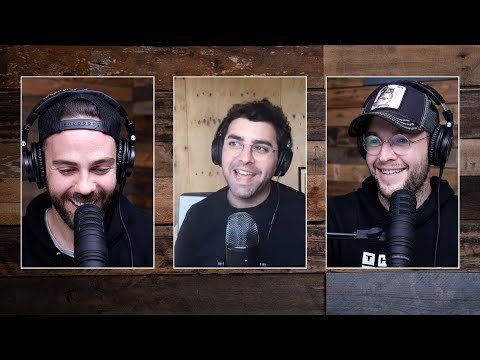
Ryan Shelton joined Tommy Jackett and Josh Janssen on Episode 788 (11 July 2020) — "Ryan Shelton On Feedback & Creating Short Film LOOPHOLE". Ryan Shelton is back with a new ryyyyyyyyyyyan.com video, LOOPHOLE. We chat about creative endeavours, building something for yourself, creating an enjoyable life for yourself, meditation and mindfulness, and taking on feedback.

Ryan Shelton joined Tommy Jackett and Josh Janssen on Episode 720 (7 May 2020) — "Ryan Shelton - 24 Hour Live Stream". Ryan Shelton is back! We chat about his project ryyyyyyyyyyyan.com, how his sense of humour has evolved, committing to a time frame and creating things you believe in!
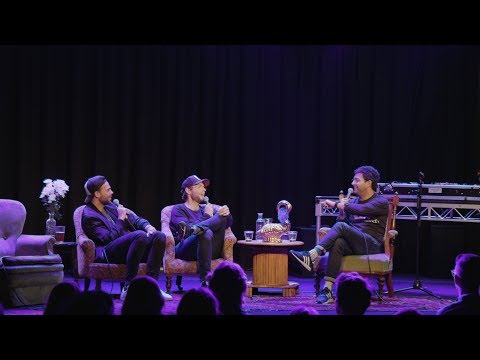
Ryan Shelton joined Tommy Jackett and Josh Janssen on Episode 579 (15 January 2020) — "Aussie Bushfire Relief With Ryan Shelton (Live Show)". Ryan Shelton joins us at the Espy for a live show presented by Lady-Brains to bring together communities to raise money for the recent bushfires in Australia.
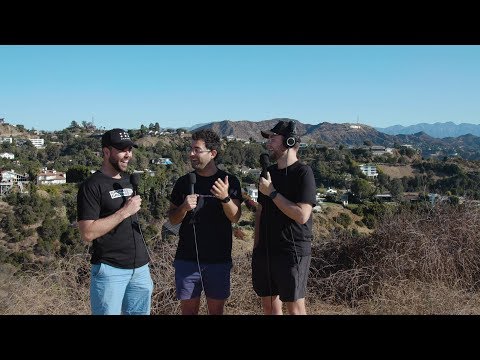
Ryan Shelton joined Tommy Jackett and Josh Janssen on Episode 511 (8 November 2019) — "Ryan Shelton On Empathy & Teamwork". Ryan Shelton has worked on some of Australia’s largest TV productions, as a comedian, writer and producer. Ryan is incredibly hard working and talented, writing and producing Hamish and Andy's Gap Year, True Stories, co-writing Chris Lilley's award-winning Can We Be Heroes, and also appearing as...